

How to Clear Tree Roots from Sewer Line: 7 Steps
Table of Contents
- How Tree Roots Get Into Your Sewer Line
- What You'll Need to Clear Tree Roots
- Step 1: Confirm Root Intrusion With a Sewer Camera Inspection
- Step 2: Choose Your Root Removal Method
- Step 3: Apply the Best Root Killer for Sewer Lines
- Step 4: Preventing Tree Roots in Sewer Lines
- Step 5: Know When to Call a Professional Plumber
- Frequently Asked Questions
Last Updated: September 22, 2026
How Tree Roots Get Into Your Sewer Line
Tree roots invade sewer lines through tiny cracks and loose pipe joints, then grow into thick masses that block wastewater flow. This guide from The Gentleman Plumber explains how to clear tree roots from a sewer line in seven steps, from diagnosis to prevention.
Roots seek water and nutrients. A sewer lateral carries both. Even a pinhole gap at a pipe joint invites root growth, and once inside, roots expand until you have a full blockage.
Root intrusion is the process of tree and shrub roots entering a pipe through cracks, gaps, or loose joints and forming a mass that restricts flow.
Older clay and cast iron pipes crack over time. That is why homes built before the 1980s see more root problems. If your house dates to that era and you keep getting backups, the pipe itself is often the cause, not just the tree.
Warning Signs of Root Intrusion
Watch for these signals before a full sewer backup hits:
- Slow drains in multiple fixtures at once
- Gurgling toilets after you run the washing machine
- Sewage smell in the basement or yard
- Soggy patches or extra-green grass over the sewer path
- Repeat clogs in the same drain
One slow drain is usually local. Several slow drains point to the sewer main.
What You'll Need to Clear Tree Roots
Gather your tools before you start. A sewer camera inspection confirms the problem. The right root cutter or drain snake does the work.
For diagnosis:
- Sewer camera (rental or pro service)
- Work gloves and eye protection
For mechanical removal:
- Drain cleaning machine or mechanical auger
- Root cutter attachment
- Coil rodder for smaller lines
For chemical treatment:
- Copper sulfate or foaming root killer
- Bucket and measuring cup
For cleanup:
- Old towels and plastic sheeting
- Disinfectant
Rent a drain cleaning machine from a tool rental yard if you don't own one. Ask for the root cutter head, not just the standard auger bit.
Step 1: Confirm Root Intrusion With a Sewer Camera Inspection
A sewer camera inspection is the only way to confirm roots, find their location, and see the pipe's condition. Skip this step and you're guessing.
The camera travels the sewer lateral and sends video to a monitor. You'll see the root mass, the pipe joint where it entered, and any structural damage.
Mark the camera's distance reading when roots appear. That number tells a plumber exactly where to dig if needed.
Sewer Camera Inspection Cost
Camera inspection pricing depends on line length and access points. Most providers quote a range rather than a flat fee. Ask for an upfront quote before work begins.
Some companies waive the inspection fee if you book the repair with them. Others charge separately. Get the number in writing first.
Step 2: Choose Your Root Removal Method
Match the method to the blockage. Light roots near the entry point need less force than a dense root mass deep in the line.
Mechanical Auger and Root Cutter
A mechanical auger with a root cutter head spins through the pipe and slices roots. This works well for moderate growth.
Feed the cable slowly. Let the cutter do the work. Forcing it can crack older pipes.
Hydro Jetting vs Snaking
Hydro jetting uses high-pressure water to scour the pipe walls. A drain snake mechanically breaks up clogs.
| Method | Best For | Limitation |
|---|---|---|
| Drain snake | Light roots, single clogs | Leaves roots behind |
| Root cutter | Moderate root masses | Can stress old pipes |
| Hydro jetting | Heavy roots, grease, scale | Needs a pro, higher cost |
Snaking punches a hole. Hydro jetting cleans the whole pipe. For repeat root problems, jetting buys more time.
Step 3: Apply the Best Root Killer for Sewer Lines
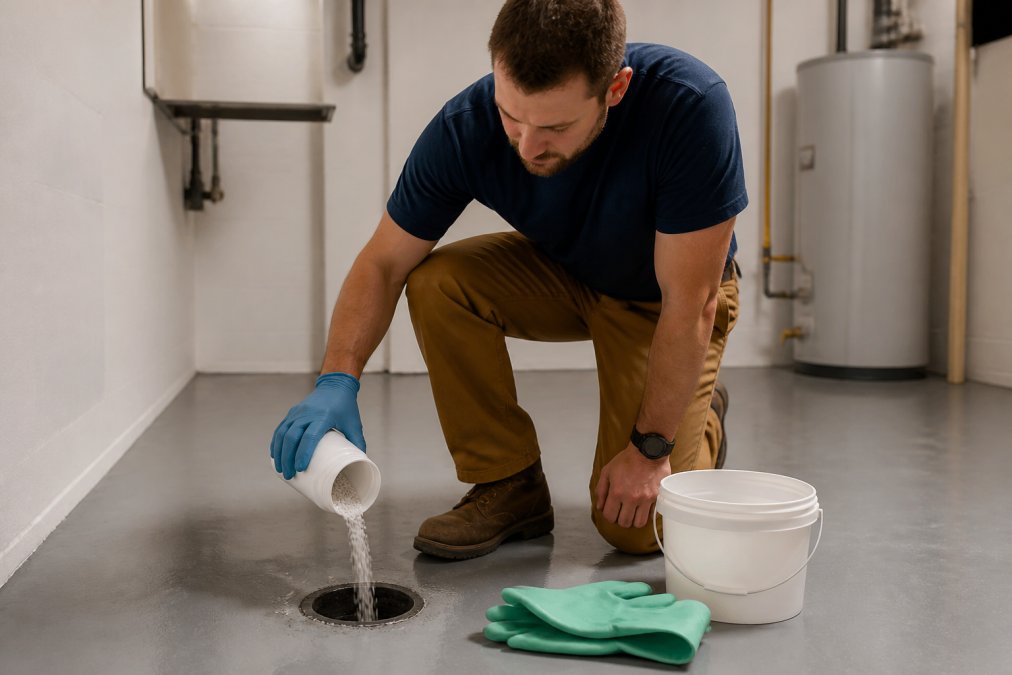
The best root killer for sewer lines depends on whether you are treating a live blockage or maintaining a cleared line. For most homes, copper sulfate is the default choice. It kills roots on contact and slows regrowth without attacking the pipe itself.
How Copper Sulfate Actually Works
Copper sulfate is a contact herbicide. When it reaches the root mass, copper ions disrupt the root cells' ability to take in water, and the root dies back. The catch: it only kills roots it touches. Roots above the water line or packed behind a grease cap survive. That is why copper sulfate is a maintenance tool, not a cure for a dense root mass.
Dosage and Application
Follow the label exactly. More is not better. Overuse can harm plants, kill the bacteria your septic or municipal system relies on, and corrode older metal pipes over time.
- Granular copper sulfate: typically 1 to 2 pounds per application for a residential lateral, poured into a cleanout or the lowest floor drain, followed by 2 to 3 gallons of water.
- Foaming root killer: one 2-pound container per application for most residential lines, poured into a cleanout and followed by a small amount of water to activate the foam.
- Frequency: twice per year, once in fall when roots slow, once in spring after the line has been flushed.
Tree Species Risk Assessment
Chemical treatment is a maintenance tool, not a cure. It will not remove a dense root mass, and it will not fix a cracked pipe. Pair it with mechanical removal and, when the pipe is failing, with pipe lining or trenchless repair.
Step 4: Preventing Tree Roots in Sewer Lines
Preventing tree roots in sewer lines comes down to three habits: treat twice a year, watch what you plant, and fix small problems early.
- Apply root killer every six months
- Plant trees at least 10 feet from the sewer line
- Choose slow-rooting species near pipes
- Fix clogged drains before they become backups
- Schedule a camera check every two years
Step 5: Know When to Call a Professional Plumber
Call a pro when roots return within months, when the pipe shows cracks, or when you see structural damage on camera. DIY methods buy time, not a fix.
Signs it's time for professional plumbing services:
- Roots return within 3-6 months
- Camera shows cracked or collapsed pipe
- Multiple pipe blockages in one year
- Sewer backup into the home
- Trenchless repair or pipe lining is needed
What a Pro Does That You Can't
A licensed plumber brings three things a rental machine does not: a sewer camera to see the pipe's true condition, a hydro jetting rig that scours the full pipe diameter instead of punching a hole, and the ability to recommend repair rather than repeat cleaning. A camera inspection before and after jetting is the standard of care, if a company jets without inspecting, ask why.
Cost Ranges to Expect
Pricing varies by line length and access. Request a call for a quote.
Insurance and Warranty Coverage
This is the question most homeowners ask too late. Standard homeowners insurance typically does not cover root intrusion or the cost of clearing a sewer line, because it is considered a maintenance issue rather than a sudden, accidental loss. Some policies cover the resulting water damage if a backup causes interior flooding, but only if you carry a water backup endorsement, check your declarations page.
Before you authorize a repair, do three things:
- Call your insurer and ask specifically whether root intrusion and sewer line repair are covered.
- Check whether your utility offers a service line warranty program.
- Ask the plumber whether the repair carries a workmanship warranty and for how long.
Choosing a Plumber
Look for a licensed, insured company that provides a camera inspection before and after the work, quotes a flat price rather than an hourly rate, and offers a written warranty on the repair. Avoid anyone who recommends replacement without showing you the camera footage.
Mechanical removal and chemical treatment manage roots. Repairing or lining the pipe solves the cause. If roots keep coming back, the pipe is the problem, and insurance rarely pays for it unless you have a specific endorsement or service line warranty.
Frequently Asked Questions
What will dissolve tree roots in a sewer line?
No chemical fully dissolves a large root mass. Copper sulfate and foaming root killers kill small root tips and slow regrowth, but they cannot remove a thick blockage. For heavy intrusion, a mechanical auger or hydro jetting is needed to cut the roots away. After clearing, a preventive treatment can keep new growth in check.
How much does it cost to get tree roots out of a sewer line?
Pricing depends on the severity of the blockage, the length of the line, and the method used. A simple snaking may cost less than hydro jetting or camera-guided cutting. The Gentleman Plumber provides upfront pricing after inspecting your line, so you know the cost before work begins. Request a call for a quote.
Does homeowners insurance cover tree roots in sewer lines?
Coverage varies by policy. Many standard homeowners policies exclude damage from tree roots unless the roots caused a sudden, accidental issue. Some insurers offer a sewer backup endorsement that may help. Check your policy or call your agent to confirm what is covered before you file a claim.
Can I use copper sulfate to kill roots in my pipes?
Copper sulfate can kill small root tips, but it is a temporary fix and may harm beneficial bacteria in your septic system. It also does not remove the existing root mass. Use it only as a maintenance step after mechanical clearing, and follow label directions carefully. For a lasting solution, address the root entry point.
Tree roots will keep finding your sewer line until the pipe is sealed or replaced. If you're tired of repeat clogs and emergency calls, The Gentleman Plumber can help. Our team offers 24/7 emergency service, upfront pricing, and licensed, insured technicians who diagnose the real cause, not just the symptom. We're locally owned and rated 4.9 stars on Google. Request a call with The Gentleman Plumber and get your sewer line flowing clear again.