

Best Energy Efficient HVAC Brands for Homes
Table of Contents
- What Makes an HVAC Brand Energy Efficient
- SEER2 Rating Explained: What You Need to Know
- Top Energy Efficient HVAC Brands and Their Strengths
- HVAC System Tax Credits 2026: What Homeowners Qualify For
- How to Maintain HVAC Efficiency Year-Round
- Long-Term ROI: Energy Savings vs. Installation Costs
- Environmental Impact and Refrigerant Considerations
- Choosing the Right System for Your Home and Climate
- Frequently Asked Questions
Last Updated: September 24, 2026
What Makes an HVAC Brand Energy Efficient
An energy efficient HVAC brand delivers more cooling or heating power per unit of electricity consumed, minimizing waste while reducing utility bills and maintaining year-round comfort.
Leading energy efficient HVAC brands combine advanced compressor technology, high-performance refrigerants, and intelligent controls to maximize comfort while minimizing energy use.
SEER2 and HSPF2 Ratings Explained
SEER2 (Seasonal Energy Efficiency Ratio 2) measures cooling efficiency; HSPF2 (Heating Seasonal Performance Factor 2) measures heating efficiency. These 2023 standards use realistic testing conditions reflecting actual home use. Higher ratings indicate better efficiency, SEER2 16+ for cooling, HSPF2 8.5+ for heating. A SEER2 18 system costs 25-30% less to operate than a SEER2 13 baseline over its lifetime.
Inverter Technology and Variable-Speed Compressors
Inverter technology adjusts compressor speed to match demand rather than cycling on and off repeatedly. This eliminates startup surges and maintains steady operation, delivering 20-40% lower energy consumption than fixed-speed systems while improving temperature consistency and reducing noise.
SEER2 Rating Explained: What You Need to Know
SEER2 ratings measure cooling efficiency over an entire season, accounting for part-load performance where systems operate most of the time. Federal minimums require SEER2 13, but energy efficient HVAC brands typically offer SEER2 15-22. Every 2-point increase translates to roughly 10% lower cooling costs.
Top Energy Efficient HVAC Brands and Their Strengths
Selecting an energy efficient HVAC brand depends on climate, home size, and budget. Options range from premium efficiency leaders to value-focused systems meeting federal standards.
Premium Efficiency Leaders
Premium systems deliver SEER2 18+ and HSPF2 9.5+ through inverter compressors, variable-speed air handlers, and smart controls. Installation costs are higher, but payback typically occurs within 8-12 years through reduced utility bills.
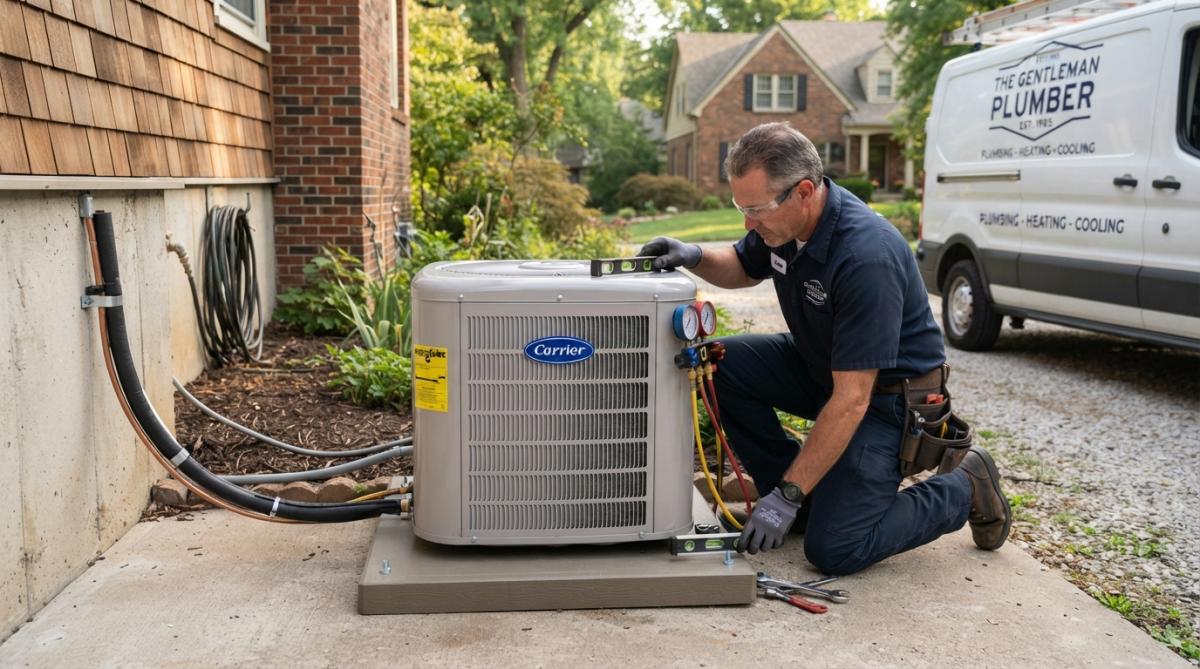
Mid-Range Efficiency Options
Mid-range systems deliver SEER2 15-17 and HSPF2 8-9 with variable-speed compressors and single-stage cooling. They balance efficiency gains against moderate installation costs, with noticeable utility bill reductions in the first cooling season.
Value-Focused Efficient Systems
Value-focused systems meet federal minimum SEER2 13 standards with fixed-speed compressors and improved heat exchanger design. They suit tight budgets or mild climates, with straightforward installation and widely available parts.
HVAC System Tax Credits 2026: What Homeowners Qualify For
Federal tax credits for energy efficient HVAC brands changed in 2026, offering homeowners meaningful financial incentives. Qualifying systems must meet specific SEER2 and HSPF2 thresholds set by the Department of Energy.
According to IRS guidance on energy-efficient home improvements, homeowners can claim tax credits for installing qualifying heat pumps and air conditioning systems. The credit amount depends on the equipment's efficiency rating and your home's location. Many states and utilities offer additional rebates on top of federal credits, sometimes covering 20-30% of installation costs.
Eligibility requires that a licensed professional install the system and that the equipment meets current Energy Star certification standards. Check with your installer about available rebates in your area, programs change frequently and many expire at year-end.
How to Maintain HVAC Efficiency Year-Round
Even the best energy efficient HVAC brand loses performance without consistent maintenance. Dirty filters, refrigerant leaks, and worn compressors reduce efficiency over time.
Preventative Maintenance Tasks
Replace air filters every 90 days during heavy-use seasons to prevent 5-10% energy increases. Clean outdoor condenser coils twice yearly and clear vegetation at least two feet away. Seal ductwork leaks with mastic sealant or metal tape to prevent 15-30% air loss.
Professional Inspections and Tune-Ups
Schedule annual professional maintenance before each major season. Technicians check refrigerant charge, electrical connections, compressor condition, airflow, and thermostat calibration to catch problems early and maintain rated efficiency.
Long-Term ROI: Energy Savings vs. Installation Costs
Payback periods depend on your current system's efficiency, regional electricity rates, and climate zone. Calculate your own savings using actual utility bills rather than relying on rough estimates.
Calculating Your Potential Savings
Check utility bills for HVAC costs (typically 40-50% of total usage). Calculate efficiency gains: SEER2 10 to 18 = 80% cooling improvement; HSPF2 7 to 9.5 = 36% heating improvement. Example: A hot-climate homeowner spending $1,200 annually on cooling would save $960 yearly with a SEER2 18 upgrade, $14,400 over 15 years. A Northeast homeowner spending $1,800 on heating would save $630 yearly with HSPF2 9.5, $9,450 over 15 years.
Installation Cost vs. Payback Period
Premium systems (SEER2 18+, HSPF2 9.5+) cost $7,000-$12,000; mid-range (SEER2 15-17, HSPF2 8-9) cost $5,500-$8,500; value-focused cost $4,000-$6,000. A $9,000 premium system with $960 annual savings breaks even in 9.4 years, delivering $5,400-$9,600 in net savings over 15-20 years. Mid-range systems often offer the strongest ROI: a $6,500 system with $600 annual savings breaks even in 10.8 years.
Climate-Specific Payback Timelines
Hot climates (Florida, Louisiana, Texas) see 8-11 year payback for premium systems; moderate climates (California, Arizona) see 10-14 years; cold climates (Minnesota, Wisconsin, New England) see 11-15 years. High-rate states (Massachusetts, Hawaii, New York) see 7-9 year payback; low-rate states (Louisiana, Oklahoma, Kentucky) see 12-15 years.
Beyond Energy Savings: Additional Value
Premium systems run 6-8 decibels quieter, improve humidity control and indoor air quality, and integrate with smart thermostats.
Premium efficiency makes sense if you plan to stay 12+ years, live in high-demand climates, or have above-average electricity rates. Mid-range systems deliver strong ROI for most homeowners across all climates.
Environmental Impact and Refrigerant Considerations
Refrigerant selection is consequential because the industry is undergoing a mandatory transition affecting system availability, compatibility, and long-term value.
The Refrigerant Transition: From R-410A to A2L
R-410A, the standard for two decades, has a global warming potential (GWP) of 2,088. Effective January 1, 2025, the EPA banned R-410A production and import, mandating A2L refrigerants (R-32, R-454B, R-454C) with GWP 466-695, roughly 70% lower than R-410A.
Why This Matters for Your Purchase Decision
All new systems use A2L refrigerants by default. A2L requires EPA-approved technician training and is not backward-compatible with R-410A, you're locked into the original refrigerant type for the system's life. Ensure your installer has A2L certification. A2L adoption is ramping up; service technician availability varies by region, with rural areas potentially facing challenges.
Environmental Impact: Two Pathways
A2L systems reduce direct environmental impact by 70% versus R-410A. However, energy efficiency delivers greater environmental benefit, a SEER2 18 system prevents more CO2 emissions through reduced electricity than refrigerant choice alone. The best environmental choice is the most efficient system your budget allows, regardless of refrigerant type.
Future-Proofing Your Investment
A2L adoption is irreversible for 15-20 years. Choose a brand with strong market presence and service infrastructure, leading manufacturers (Carrier, Trane, Lennox, Rheem, Daikin) maintain extensive service networks. Verify your installer is EPA-certified for A2L work and ask about their training timeline.
Proper Refrigerant Handling at End-of-Life
When your system reaches the end of its life (typically 15-20 years), the refrigerant must be recovered and recycled by a licensed technician. A2L refrigerants require specialized recovery equipment, but licensed HVAC contractors already have this equipment or access to it.
Choosing the Right System for Your Home and Climate
Your climate zone determines which energy efficient HVAC brand features matter most. Hot, humid climates prioritize cooling efficiency and dehumidification capability. Cold climates emphasize heating efficiency and low-temperature performance.
| Factor | Premium Efficiency | Mid-Range Efficiency | Value-Focused |
|---|---|---|---|
| SEER2 Rating | 18-22 | 15-17 | 13-14 |
| HSPF2 Rating | 9.5+ | 8-9 | 7-7.5 |
| Compressor Type | Inverter variable-speed | Variable-speed | Fixed-speed |
| Typical Payback Period | 8-12 years | 10-15 years | 15-20 years |
| Annual Cooling Savings | $800-1,200 | $500-800 | $200-400 |
| Installation Complexity | High | Moderate | Low |
Frequently Asked Questions
What SEER2 rating should I look for in a new energy efficient HVAC system?
Look for SEER2 ratings of 16 or higher for strong efficiency gains. Systems rated 18+ are considered premium efficiency. Your home's size, climate zone, and insulation quality affect the ideal rating. ENERGY STAR certified units typically start at SEER2 15. A licensed HVAC technician can recommend the right rating based on a load calculation for your specific home.
Are high-efficiency HVAC systems worth the extra upfront cost?
Yes, in most cases. Higher-efficiency systems reduce utility bills by 20-40% annually compared to standard units. Federal tax credits and rebate programs can offset 30% of installation costs. Over a system's 15-20 year lifespan, energy savings typically exceed the initial price premium. The payback period is usually 5-8 years, after which you pocket pure savings.
What federal tax credits are available for HVAC systems in 2026?
The Inflation Reduction Act provides tax credits up to $2,000 for qualifying HVAC system replacements. Systems must meet ENERGY STAR standards and be installed in your primary residence. Heat pumps and variable-speed systems often qualify for additional incentives. Check with your HVAC technician or the IRS website for current eligibility requirements, as credits and income limits may change annually.
How often should I maintain my HVAC system to keep it running efficiently?
Schedule professional maintenance twice yearly: once before heating season and once before cooling season. Replace air filters every 1-3 months depending on usage and air quality. Clean outdoor condenser coils annually. Check refrigerant levels and inspect ductwork for leaks. Regular preventative maintenance extends system lifespan, maintains efficiency ratings, and prevents costly emergency repairs.